
Can Better Illumination Prevent the Next Midnight Crash?
Why it matters: The real issue in night collisions isn't just whether a hazard was physically visible, it's when a driver actually recognized it as a threat.
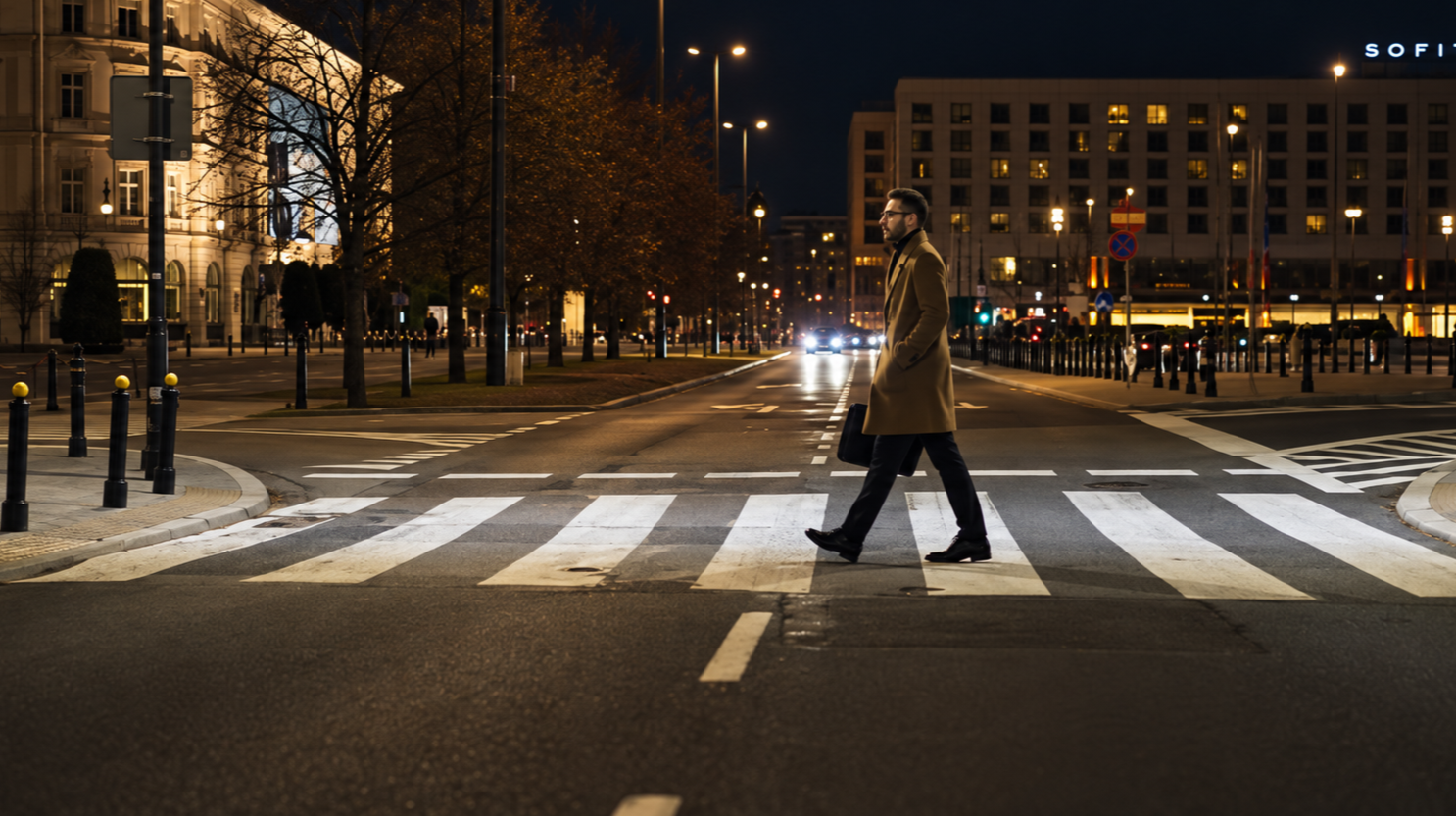
Many nighttime collision analyses turn on a critical question: not simply whether a hazard was physically visible, but when it became recognizable as a hazard requiring a response.
Detection distance is influenced by far more than ambient lighting. Glare, contrast, colour, retroreflectivity, roadway geometry, background clutter, and surrounding visual conditions can all affect what a driver is able to perceive, and when.
Importantly, seeing an object is not the same as recognizing its significance. A driver may detect something ahead but not identify it as a pedestrian, stopped vehicle, roadway obstruction, or other hazard until valuable response time has already been lost. Poor contrast and visually complex nighttime environments can further delay recognition.
A defensible nighttime visibility assessment requires a structured, evidence-based approach that considers sightlines, lighting and vehicle conditions, scene geometry, human-factors timing, and the available physical evidence. At Advantage Forensics, our nighttime visibility and human-factors experts turn statements such as “I didn’t see it” into testable engineering questions.
Need to understand whether a hazard was recognizable? Ask Advantage.